Signs of a failing septic system
What homeowners notice
Backup, wet ground, odor
The signs recorded from Kentucky search language are sewage backing up into the home, slow drains, gurgling, standing water or damp spots near the tank or drain field, bad odors, and bright green spongy grass over the field. Kentucky publishes no pumper list.
The six signs
Backup into the house is the urgent one. Slow drains and gurgling often come with it. Outside, the clues are wet ground near the tank or the field, odor, and a strip of bright green spongy grass. Those are the phrases Kentucky homeowners use for these symptoms.
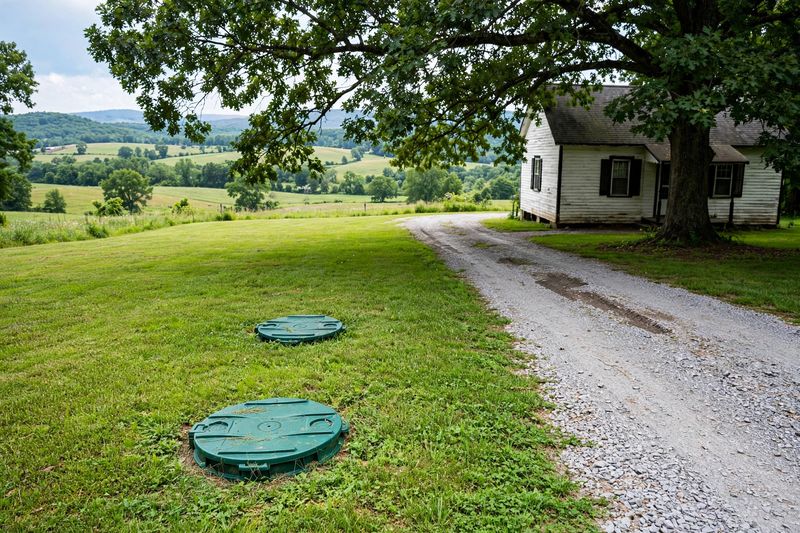
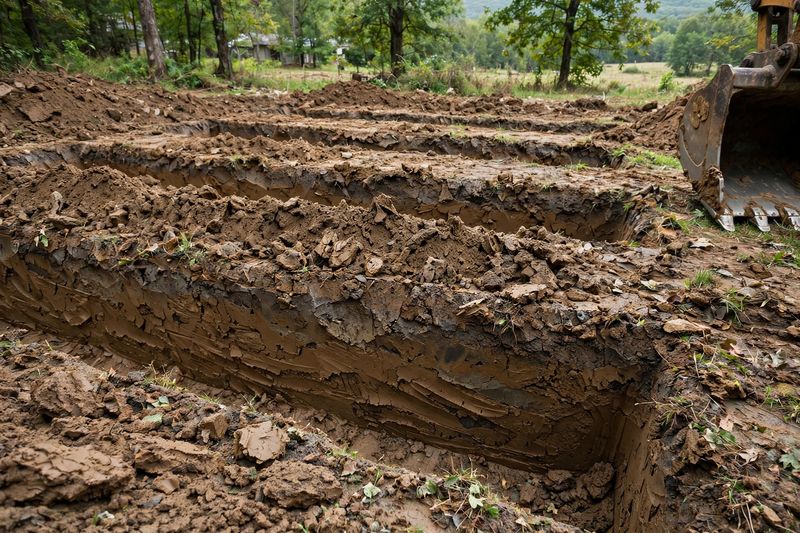
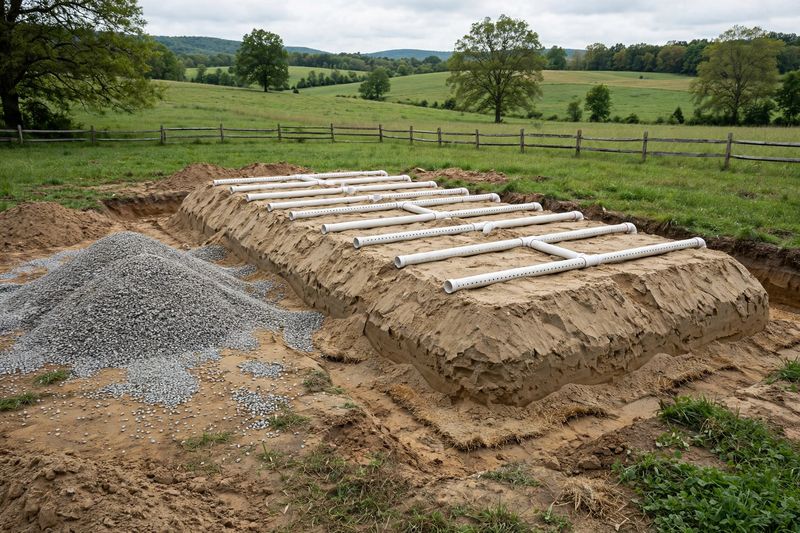
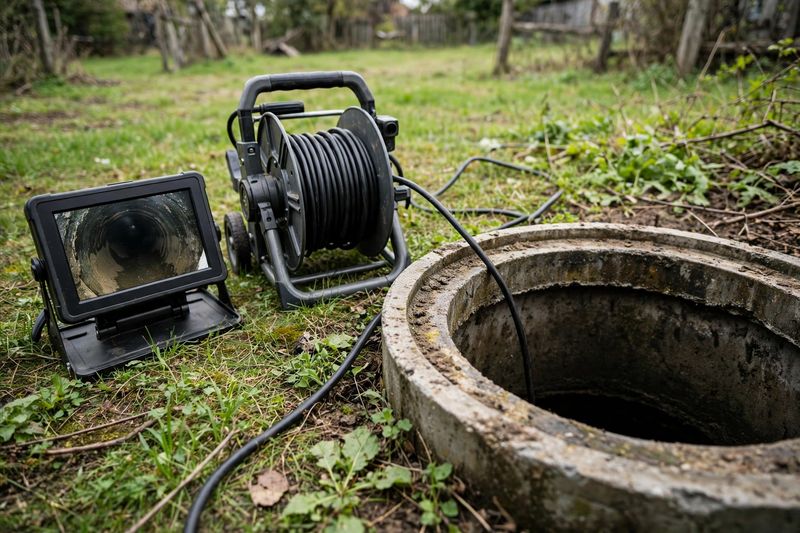
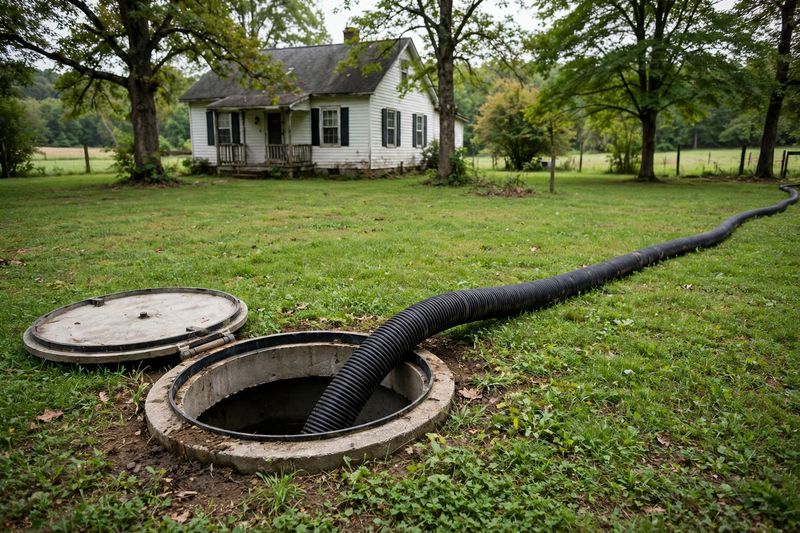
This page describes signs. It does not diagnose a yard from a photograph. The photos are scenes of lids, trenches, and hoses.
Spring rain and local ground
Eastern and southern Kentucky clay holds water in a wet spring, and homeowners describe the same failure returning when the rains arrive. McCreary and Wayne are the clay-hill counties in this directory. Pulaski's karst is a different problem: rock, sinkholes, and water that leaves the surface.
Purchase river bottoms add a high water table. A site evaluation is how the department reads that ground before a repair permit. The Purchase repair permit fee is $170, a district fee.
What the cost guides say next
If the field is the failed piece, published estimates put replacement from $2,000 to $20,000, with averages near $6,000 to $7,000, recorded Nov 20, 2026. A full system is the SepticSage range of $4,000 to $13,000.
Pumping on the 3 to 5 year interval is the maintenance step. SepticSeeker publishes $250 to $400 as typical. A full tank and a failed field are different problems, and the symptom list is how homeowners tell the search engines which one they have.
Who to call first
The county health department is the first call when a system is failing and a permit may be required. The installer roster is the second document, if the county is one of the 22. The department permits. The roster names installers.
Kentucky publishes no pumper list, so a pumping emergency is a local phone call. The directory cannot point to a pumper column it does not have.
Kentucky specifics
Permit steps for a repair or a replacement are still a site evaluation where the department requires one, a permit, and an inspection before backfill. Fees are printed on the county page only when the district publishes them.
The 258 installer records were checked Nov 21, 2026. None of them includes a note that the company handles backups. If you need the list, open the county. If you need a permit, call the department named on that page.
See installers listed in your county
Adair County
24 installers with certification numbers on the Lake Cumberland District list dated Oct 7, 2026.
Anderson County
14 installers with certification numbers on the Anderson County list dated Mar 26, 2025.
Ballard County
3 installers on the Purchase District list dated Jan 15, 2026.
Caldwell County
7 installers on the Pennyrile District list dated Jun 2, 2021.
Carlisle County
5 installers on the Purchase District list dated Jan 15, 2026.
Casey County
16 installers with certification numbers on the Lake Cumberland District list dated Oct 7, 2026.
Clinton County
20 installers with certification numbers on the Lake Cumberland District list dated Oct 7, 2026.
Crittenden County
3 installers on the Pennyrile District list dated Jun 2, 2021.
Cumberland County
12 installers with certification numbers on the Lake Cumberland District list dated Oct 7, 2026.
Franklin County
15 installers on the Franklin County list dated Aug 13, 2026.
Fulton County
2 installers on the Purchase District list dated Jan 15, 2026.
Green County
8 installers with certification numbers on the Lake Cumberland District list dated Oct 7, 2026.
Hickman County
2 installers on the Purchase District list dated Jan 15, 2026.
Livingston County
2 installers on the Pennyrile District list dated Jun 2, 2021.
Lyon County
3 installers on the Pennyrile District list dated Jun 2, 2021.
McCracken County
9 installers on the Purchase District list dated Jan 15, 2026.
McCreary County
11 installers with certification numbers on the Lake Cumberland District list dated Oct 7, 2026.
Pulaski County
41 installers with certification numbers on the Lake Cumberland District list dated Oct 7, 2026.
Russell County
12 installers with certification numbers on the Lake Cumberland District list dated Oct 7, 2026.
Taylor County
19 installers with certification numbers on the Lake Cumberland District list dated Oct 7, 2026.
Trigg County
10 installers on the Pennyrile District list dated Jun 2, 2021.
Wayne County
20 installers with certification numbers on the Lake Cumberland District list dated Oct 7, 2026.
Questions on this guide
What are signs of a failing septic system?
Sewage backing up, slow drains, gurgling, wet spots near the tank or field, bad odors, and bright green spongy grass. Those are the phrases recorded from Kentucky pages on Nov 20, 2026. They describe symptoms.
Why does my septic system fail every spring?
Clay soils and spring rain are the combination Kentucky pages describe, especially on hillside lots. McCreary and Wayne are the clay-hill counties in this directory. The health department's site evaluation is the official reading of that soil.
How much does it cost if the field has failed?
Published estimates for drain field replacement run from $2,000 to $20,000, with averages near $6,000 to $7,000, recorded Nov 20, 2026. A full system is a wider install range, $4,000 to $13,000 from SepticSage.
Is a backup the same thing as a tank that needs pumping?
A tank past the 3 to 5 year interval can cause a backup. A damaged field can cause one too. Kentucky publishes no pumper list. The installer rosters on this site are installer files, checked Nov 21, 2026.
Sources: symptom list recorded from Kentucky pages on Nov 20, 2026. Drain field replacement estimates of $2,000 to $20,000, averages near $6,000 to $7,000. SepticSage system range. SepticSeeker pumping range. Purchase District repair permit $170. District lists checked by TankChecked on Nov 21, 2026. Kentucky publishes no pumper list.